

100A vs. 200A Panels: When It's Time to Upgrade Your Metro Detroit Home's Electrical Service
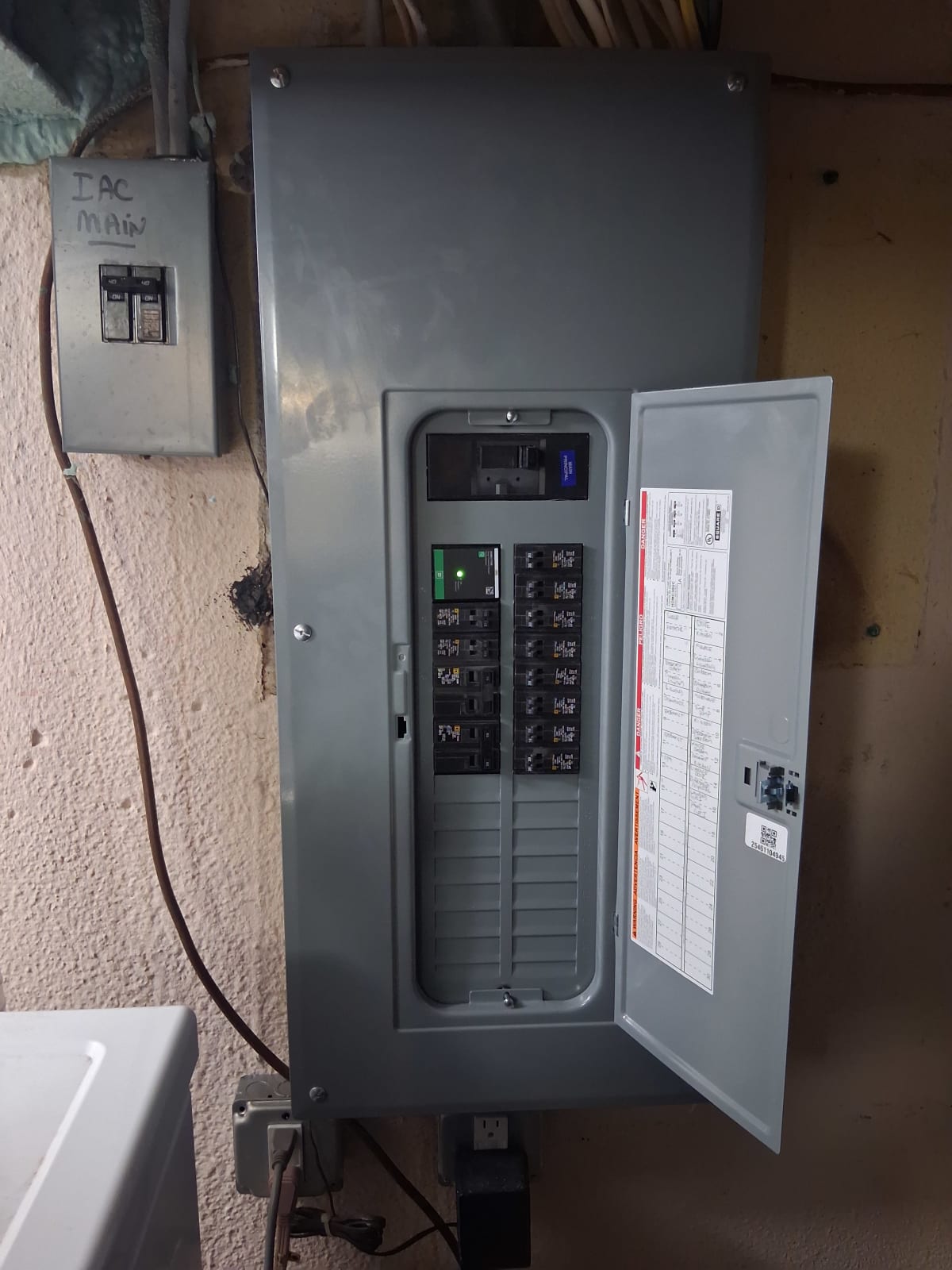
If your breaker panel is original to a house built before the mid-1990s, there's a good chance it's rated for 100 amps — and a good chance it was plenty of power for the home it was built for. The problem isn't the panel getting old. It's that the average home's electrical load has quietly grown past what 100 amps was ever meant to carry, especially once an EV charger, a generator, or a kitchen full of high-draw appliances enters the picture.
Here's how to tell if that's happening in your house, and what actually goes into fixing it.
The Clearest Sign: You're Already Bumping Into the Ceiling
A 100A panel that's doing its job will still trip breakers under a genuine overload — that's the breaker working correctly. What we're talking about here is different: a panel that's chronically out of room. If any of this sounds familiar, it's usually the panel talking:
- You can't run the microwave and a space heater on the same circuit without a trip
- Adding a new circuit means an electrician telling you there's no room left in the panel
- Your breaker box already has tandem/"twin" breakers doubled up to squeeze in extra circuits
- An EV charger, generator, or induction range is on your wish list and a quote came back requiring a panel upgrade first
None of these mean anything is unsafe today. They mean the service is maxed out, and the next major appliance or addition is going to force the upgrade conversation anyway — usually at a less convenient time than the one you'd pick yourself.
Why 100A Stops Being Enough
A 100A panel was standard for decades because a mid-century home's actual electrical load was genuinely modest — lights, a furnace blower, a refrigerator, a handful of outlets. Today's load calculation looks different in almost every Macomb and Oakland County home we go into: central air, an electric water heater or range, a finished basement with its own circuits, and increasingly, a car that plugs in overnight. Stack a couple of those on a 100A service and there's often less headroom than homeowners expect — even before adding anything new.
This is exactly the sequel to swapping out a dangerous legacy panel (Federal Pacific, Zinsco, and the like): once a homeowner replaces an unsafe panel, the next question is almost always "should I just go to 200A while it's open?" Usually, yes.
What a 200A (or 400A) Upgrade Actually Involves
A panel upgrade is not a one-for-one box swap. It's a coordinated job:
- Load calculation — sizing the new service to your home's actual current and future load, not just doubling the number for the sake of it.
- Power shutdown — we handle disconnecting the power ourselves for the swap; there's typically no need to schedule DTE out to cut power at the meter.
- Permit and inspection — panel upgrades require a permit and inspection under the Michigan Electrical Code (based on the NEC) in every municipality we work in.
- The swap itself — new panel, new main breaker, and re-terminating every existing circuit into the new panel, properly labeled.
- Grounding and bonding brought up to current code — including Michigan's now-required outdoor main service disconnect (more on that below).
Quick Reference: Panel Size Comparison
| Service Size | Typical Era | Handles Today's Loads? | EV/Generator Ready? | Recommended For |
|---|---|---|---|---|
| 60A Fuse Box | Pre-1960s | No | No | Immediate upgrade |
| 100A Panel | 1960s–1990s | Often, barely | Rarely | Smaller homes, light loads |
| 200A Panel | 1990s–present standard | Yes | Yes | Most single-family homes |
| 400A Panel/Sub-panel | Modern, high-load homes | Yes, with headroom | Yes, multiple | Large homes, stacked major loads |
The Outdoor Main Disconnect: A Code Change That Also Affects Your Panel
Michigan's electrical code now requires a main service disconnect that's mounted outside the home and readily accessible, so utility crews and first responders can cut power without entering the house. On most panel upgrades, we install this outdoor disconnect as part of the job.
That one change has ripple effects most homeowners don't expect. The outdoor disconnect becomes your home's new main disconnect, which means the grounding system now runs out to it instead. Your indoor panel — even though it's brand new — technically becomes a sub panel, fed from that outside disconnect rather than serving as the main point of service.
Once a panel is reclassified as a sub panel, the code rules around it change: neutrals and grounds, which are bonded together in a main panel, have to be isolated from each other in a sub panel. And any 3-wire 240V circuits — the older style used for things like electric dryers and ranges, which share a single conductor for both neutral and ground — no longer meet code in that configuration. They need to be upgraded to 4-wire circuits with separate neutral and ground conductors.
If your home has an older dryer or range circuit, this is usually where it comes up during a 200A upgrade — not because anything with the appliance is wrong, but because the code around a sub panel is stricter than the code around a main panel. We flag it during the load calculation walk-through, before any work starts, so there are no surprises on the day of.
Is 400A Overkill?
Not always. 400A service (or a 200A panel with a sub-panel) starts making sense when a home is stacking several major loads at once: a Level 2 EV charger, a whole-home generator, and a future addition or induction range, for example. For most single-family homes in Sterling Heights, Troy, Warren, and similar service areas, 200A comfortably covers current needs plus real room to grow. We size it to your actual plans, not a default number.
What a 200A Upgrade Unlocks
This is usually the more useful way to think about it than "is my panel old" — a modern 200A panel is what makes the following straightforward instead of a workaround:
- Level 2 EV charging — without derating every other circuit in the house to make room
- Whole-home or portable generator hookups — interlock kits and transfer switches both need real spare capacity
- Induction ranges and electric dryers on dedicated circuits — increasingly common in kitchen remodels
- Home additions and finished basements — new square footage means new circuits, and new circuits need somewhere to land
Michigan Electrical Code Note
Panel upgrades in Michigan require a permit and inspection under the Michigan Electrical Code, plus an outdoor main service disconnect as part of the installation. We handle the permit, the power shutdown, and the inspection as part of the job — it's not something you need to chase down yourself.
Master Electrician Safety Note
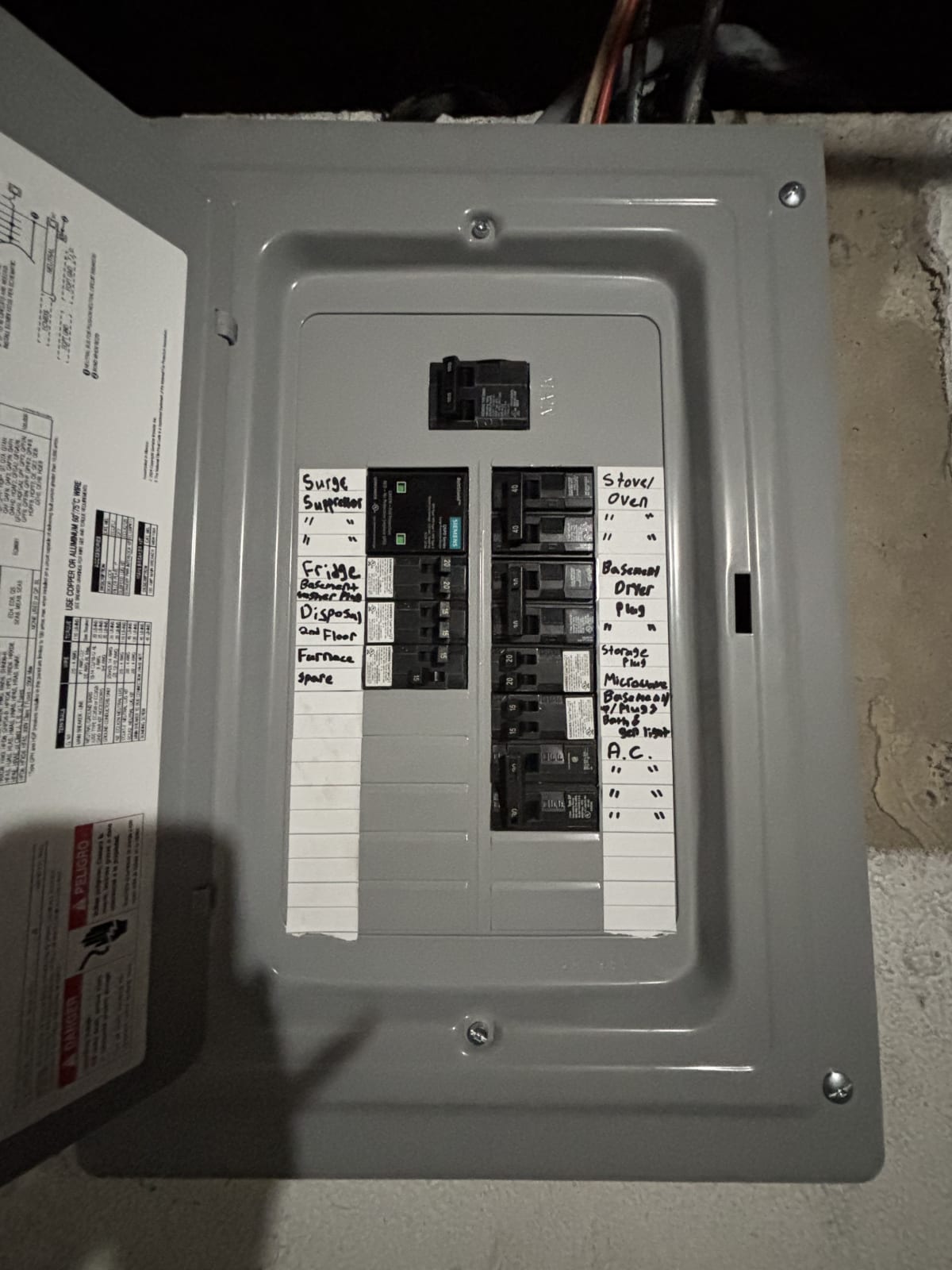
A doubled-up ("twin"/tandem) breaker here and there isn't automatically dangerous, but a panel that's relying on several of them to make room is usually a panel that's out of capacity, not out of options — that's a sign to get it evaluated rather than add one more.
FAQ
How do I know if I have a 100A panel?
The amperage is usually printed on the main breaker at the top of the panel — look for a number like "100" stamped on the largest breaker. If it's not legible or you're not comfortable opening the panel, that's a quick thing for a licensed electrician to confirm.
Will upgrading my panel cause a long power outage?
No — since we handle the power shutdown ourselves rather than waiting on a DTE crew, the outage for the actual swap is typically brief and happens on a schedule we set with you in advance, not an all-day event.
Will my dryer or range circuit need to be rewired during the upgrade?
Only if it's currently a 3-wire (older style) circuit. Michigan's outdoor main disconnect requirement turns your indoor panel into a sub panel, and sub panels require separated neutrals and grounds — so those 3-wire circuits have to be upgraded to 4-wire to stay code-compliant. We check for this during the load calculation and let you know up front if it applies to your home.
Can I add an EV charger without a full panel upgrade?
Sometimes — it depends on how much spare capacity your current panel actually has once the real load is calculated. That's worth checking before assuming either way.
Does a panel upgrade increase my home's value?
It's not marketed as a value-add the way a kitchen remodel is, but it does remove a common inspection flag during a home sale and is often expected by insurers on older homes — see our guide on working with real estate agents and inspectors for how that comes up during a sale.
Recognize more than one of these signs in your own panel? Call 586-489-1504 for a real load calculation and a straight answer on whether your home needs the upgrade.
More electrical advice for homeowners
Explore more homeowner-friendly electrical tips, safety advice, and upgrade ideas from our team.

Electrical Services For Your Home
Use our simple booking tool to schedule electrical service or get a rough estimate for common projects. Choose a time that works for you and we'll take care of the rest.