

Common Electrical Problems in Metro Detroit Homes
Every electrical service call starts the same way: a homeowner noticed something off and isn't sure if it's urgent. After years running calls across Macomb and Oakland County — from 1920s bungalows in Royal Oak to 1990s colonials in Rochester Hills — we've learned that most "something's off" moments fall into one of a handful of patterns. Knowing which one you're looking at is the difference between a five-minute phone call and an emergency service run.
Flickering or Dimming Lights
Flickering when a large appliance like an AC compressor or well pump kicks on is normal — you're seeing the voltage sag from a big motor starting up. What isn't normal is flickering that happens on its own, on one circuit or across the whole house, with nothing else running.
On a single circuit, the usual cause is a loose connection somewhere along it — at a switch, an outlet, a junction box, or the breaker itself. Loose connections don't just flicker; they heat up, and heat is what turns a wiring problem into a fire. Whole-house flickering points higher up the chain — often a loose main lug connection in the panel, or in older homes, a failing connection at the utility drop or meter. That's not a DIY diagnosis; it requires opening the panel with the main breaker verified off.
Breakers That Trip Repeatedly
A breaker tripping isn't a malfunction — it's the safety device doing its job. The question is why it's tripping.
- Overload tripping — trips only when several high-draw devices run at once (space heater, hair dryer, microwave). The circuit is doing more work than its rated amperage supports.
- Short-circuit tripping — instant, hard trip with no warning, sometimes with a spark or burning smell at an outlet. This needs same-day attention.
- Ground-fault tripping — common on GFCI-protected kitchen, bath, and outdoor circuits; usually moisture or a failing appliance, not the wiring.
- Nuisance tripping with no clear cause — often the breaker itself has simply worn out; breakers are mechanical devices with a service life.
Warm Outlets, Switches, or Panel Covers
Warmth anywhere in an electrical system means current is meeting resistance it shouldn't — a loose wire nut, a corroded connection, a breaker no longer making full contact. This is one of the few symptoms where "wait and see" is the wrong call every time. A warm cover plate today is a scorched one in a few weeks.
Buzzing at the Panel
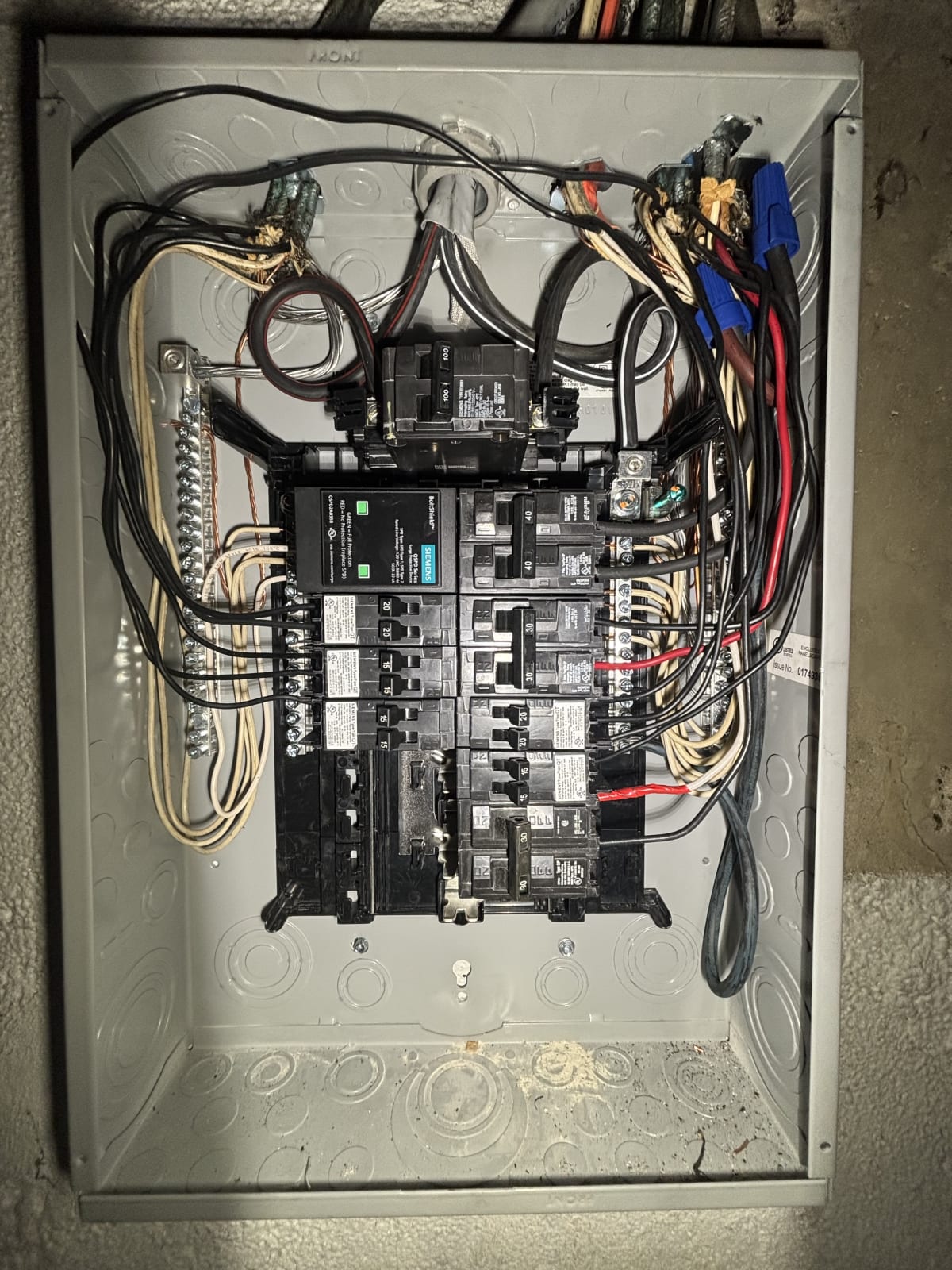
A healthy panel is silent. Buzzing — beyond the faint hum some transformers make — usually means arcing at a loose lug, a failing breaker, or a bad neutral bar connection in older installations. Because a panel is the single point every circuit runs through, this is a same-day call.
Two-Prong, Ungrounded Outlets
Homes built before the early 1960s across Royal Oak, Berkley, and Ferndale were commonly wired with no ground path. That's not automatically an emergency, but it does mean surge protectors and sensitive electronics have no ground to protect against, a three-prong adapter doesn't add a ground it just lets the plug fit, and GFCI protection can often be added at an ungrounded outlet as a code-recognized safety upgrade short of a full rewire.
Not Enough Circuits for a Modern Kitchen
A kitchen wired in 1975 was designed around one refrigerator and maybe a toaster. Today's kitchens run an air fryer, a coffee maker, and a microwave at once — often on the same two circuits the house was built with. If your kitchen breaker trips whenever more than one countertop appliance runs, that's not a quirky house — it's an underbuilt circuit doing exactly what an underbuilt circuit does.
Aluminum Branch Wiring
Homes built roughly between 1965 and 1973 sometimes used aluminum instead of copper for branch wiring, following a copper price spike at the time. Aluminum itself isn't unsafe — but aluminum-to-copper connections made with hardware not rated for the pairing loosen over time as the metals expand and contract differently. The fix is often replacing terminations with connectors rated for aluminum-to-copper transitions, not a full rewire.
Quick Reference: Symptom, Likely Cause, and Urgency
| Symptom | Likely Cause | Urgency |
|---|---|---|
| Flickering, one circuit only | Loose connection on that circuit | This week |
| Flickering, whole house | Loose main lug or utility-side connection | Same day |
| Breaker trips only under heavy load | Undersized circuit for today's appliances | Plan an upgrade |
| Warm outlet or switch plate | Loose or corroded connection | Same day |
| Buzzing at the panel | Arcing at a lug or failing breaker | Same day |
| Kitchen breaker trips with 2+ appliances | Missing dedicated small-appliance circuit | Plan an upgrade |
When It's a Same-Day Call vs. a Planned Project
Heat, buzzing, sparking, or a burning smell — anywhere in the system — is same-day, every time. Undersized circuits, missing grounds, and aging panels are real problems, but they're planning problems, worth scheduling deliberately rather than reacting to in a panic, ideally before they force your hand during a home sale or insurance renewal.
FAQ
Is it normal for a breaker panel to make any noise?
No. A healthy panel is silent. Any buzzing, humming beyond a faint transformer tone, or crackling warrants a look.
Can I replace a two-prong outlet with a three-prong one myself?
Only with GFCI protection added and the outlet labeled "No Equipment Ground" per code — otherwise you've created an outlet that looks grounded but isn't, which is more dangerous than leaving it as-is.
How do I know if my kitchen has dedicated small-appliance circuits?
If your kitchen has only one or two breakers labeled "kitchen" and every countertop appliance fights for those same circuits, it likely doesn't meet current code minimums.
Recognize more than one of these in your own house? Call 586-489-1504 — most of what's on this list is a quick, same-visit diagnosis.
More electrical advice for homeowners
Explore more homeowner-friendly electrical tips, safety advice, and upgrade ideas from our team.

Electrical Services For Your Home
Use our simple booking tool to schedule electrical service or get a rough estimate for common projects. Choose a time that works for you and we'll take care of the rest.